Supervisor: Taha Khan
Mind Maze • Interface & Spatial Navigation Design
An interactive jungle-themed Roblox experience exploring the intersection of environmental UI/UX, spatial reasoning, and decision-making psychology.
Project:
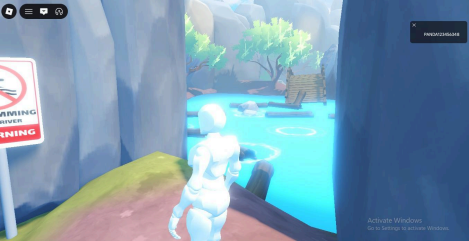
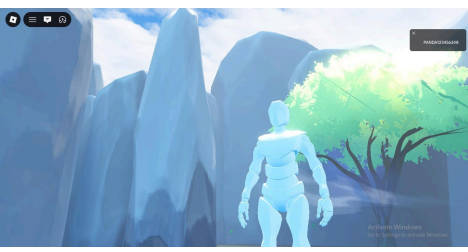
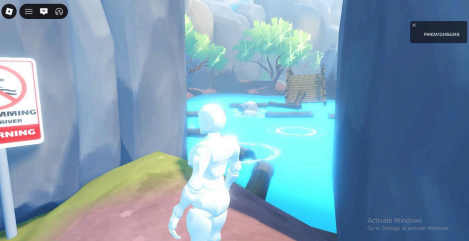
This game design study focuses on turning the physical environment itself into an active user interface. Built in Roblox, Mind Maze guides players through a non-linear jungle terrain using ambient lighting, footprints, carved signposts, and obstacles instead of standard, explicit HUD
instructions. By replacing direct prompts with diegetic cues, the project explores how players navigate uncertainty, test hypotheses, and make split-second decisions.
The Brief:
Design and deploy an immersive 3D navigation puzzle in Roblox Studio that utilizes environmental psychology and non-linear pathing to challenge executive function, testing player decision-making without relying on traditional GUI menus.
What We Did:
Diegetic UI/UX Design, Environmental Cue Mapping, Non-Linear Level Architecture, Roblox Lua Scripting, Behavioral & UX Analytics Framework.
Technology
- Development Platform: Roblox Studio (Cross-Platform Architecture & Lua Scripting) ● Environment Mechanics: Dynamic Lighting, Particle Systems (Footprints & Trails), Custom Collision Models
- Design Framework: Environmental Psychology & Cognitive Friction Logic Goal
Guide the player from start to exit through navigation and survival challenges by replacing rigid UI instructions with subtle, felt environmental signals that encourage organic exploration and strategic decision-making.
Process
- Non-Linear Maze Architecture: Structured a multi-route environment featuring fast paths, high-difficulty loops, and bypass options to reward strategic route choices and prevent single-point failures.
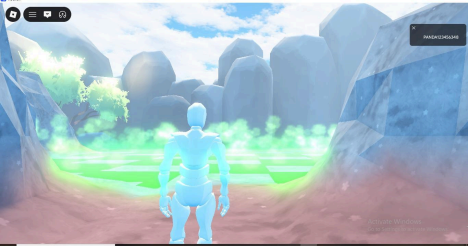
- Diegetic Navigation Signaling: Replaced explicit HUD markers with in-world environmental cues such as shafts of light, footprint trails, and stylized directional signposts to direct player movement seamlessly.
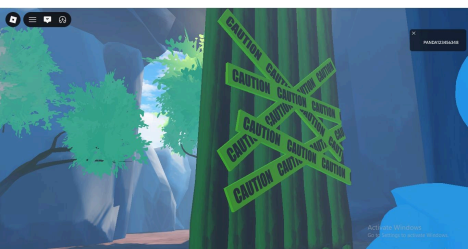
- Cognitive Friction & Trust Manipulation: Engineered conflicting environmental signals (e.g., misleading arrows or dark alternate routes) to trigger cognitive conflict and force active visual interpretation.
- Interactive Challenge Sections: Scripted distinct environmental obstacles including a 4-path colored decision hub (triggering checkpoint resets), a 3-door suspense challenge, and dynamic disappearing stepping stones near the exit.
- Behavioral Data Instrumentation: Integrated analytics tracking to record player decision times, backtrack frequencies, and path choices for continuous UX refinement and A/B testing.
Benefits
- Immersive Engagement: Keeps players deeply focused on the world space by eliminating intrusive, immersion-breaking UI pop-ups.
- High Replay Value: Multiple viable routes, shortcuts, and randomized cue behaviors naturally incentivize repeat plays.
- Cognitive Skill Reinforcement: Leverages games-based learning mechanics shown to bolster spatial reasoning and executive function.
- Scalable Platform Analytics: Provides an ideal testing environment for tracking user decision-making patterns and heuristic choices in real time.
Features
- Environment-as-Interface: Uses natural lighting variations and physical terrain features as the primary directional system.
- Multi-Branch Routing: Diverse path structures catering to varying player risk tolerances and skills.
- Environmental Traps & Penalties: Dynamic hazards (spikes, teleportation rooms, collapsing platforming elements) tied directly to navigation mistakes.
- Roblox Platform Integration: High-accessibility design deployable across PC, mobile, console, and VR devices.