Supervisor: Taha Khan
Control – Interactive Puzzle System
Control is an interactive mobile multiplayer experience exploring the boundary between player perception, misdirection, and collaborative problem-solving.
Project:
This multiplayer game study focused on dynamic control swapping and communication dynamics. By assigning three players unique target abacus configurations via their mobile devices while covertly routing their input controls to opposing players, the system creates a chaotic physical-digital puzzle loop that forces players to abandon individual strategy in favor of clear verbal coordination.
The Brief:
Design and deploy a synchronous three-player mobile puzzle game that uses input misdirection across three progressive rounds to demonstrate how trust, active listening, and communication are essential for team success.
What We Did:
Multiplayer System Architecture, Real-Time Input Synchronization, Dynamic Control Routing, UI/UX Mobile Interface, Progressive Puzzle Logic.
Technology
- Network & Backend: Real-Time Socket Architecture (Room Creation & Host-Client Sync)
- Mobile Engine: Mobile Application Framework (iOS/Android Compatibility)
- Game Logic: Input Mapping Engine & Dynamic Player Assignment Matrix
Goal:
Highlight the critical role of team trust and communication by deliberately introducing control confusion in early rounds, ultimately guiding players to a cooperative solution in the final phase.
Process
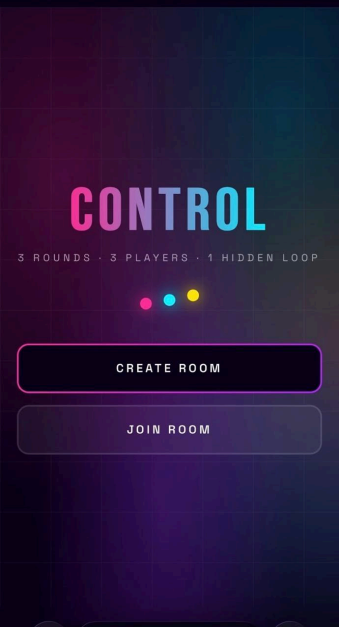
- Lobby & Room Initialization: Engineered a seamless room-creation flow where one player hosts the session and generates a room code for two joining players, establishing a synchronized three-device network instance.
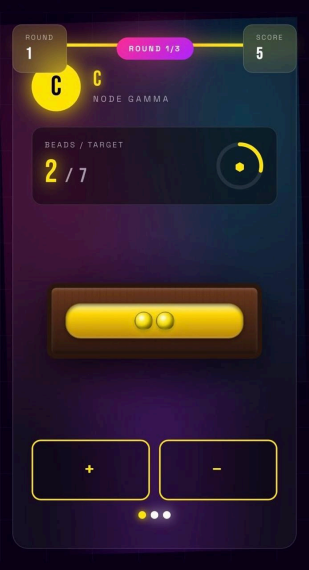
- Dynamic Target Assignment: Programmed an asymmetrical data pipeline that pushes individual, hidden target abacus bead counts to each player’s mobile interface at the start of every round.
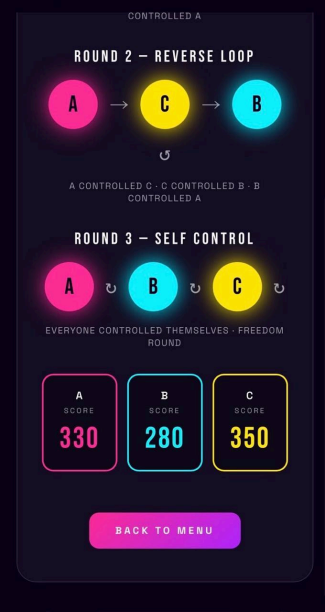
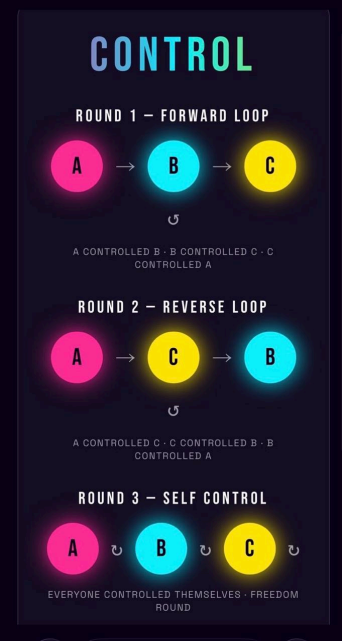
- Cross-Control Routing Logic (Rounds 1 & 2): Implemented a covert input-remapping matrix during the initial two rounds, silently directing Player A’s screen swipes to Player
B’s abacus (and vice versa) to create intentional cognitive friction and playful misdirection.
- Behavioral Friction & Observation Phase: Structured gameplay mechanics to trigger spontaneous communication, forcing players to analyze unintended bead movements, identify the hidden control swap, and troubleshoot input dependencies in real time.
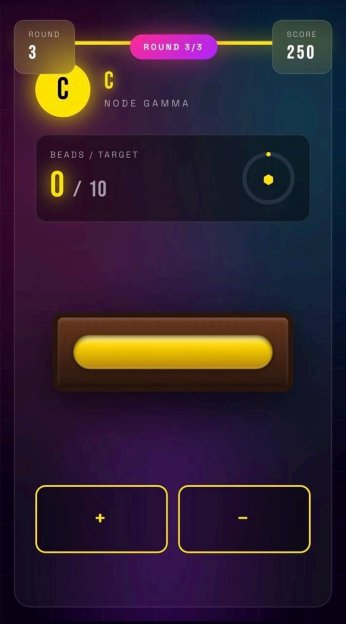
- Direct Control & Cooperative Convergence (Round 3): Restored direct 1:1 control mapping in the final round, shifting the challenge from chaotic deduction to structured verbal coordination where players share target counts to complete the puzzle together.
Benefits
- High Social Engagement: Promotes immediate verbal interaction, laughter, and debate as players work through initial confusion.
- Experiential Team-Building: Viscerally demonstrates the friction of working in silos versus the efficiency of shared information.
- Low Technical Barrier: Simple phone-based interfaces make complex multiplayer interaction accessible without requiring specialized hardware.
- Scalable Puzzle Architecture: The underlying input-swapping and room-hosting engine can be applied to diverse puzzle formats and team sizes.
Features
- Host-Driven Session Management: Instant room generation and low-latency synchronization across three active mobile clients.
- Covert Input Redirection: Automated round-based remapping that decouples physical touch inputs from local screen outputs.
- Asymmetrical Mobile UI: Private target displays customized per device to drive mandatory information sharing.
- Adaptive Control States: Dynamic switching between scrambled cross-player input matrices and direct 1:1 local responsiveness.